

Investigative analysis | Updated October 30, 2026 | By Christopher Tolliver, President of Global Freedom Mission
One Christian brother walked out of Pakistan’s highest court acquitted. The other remained under a sentence of death. On October 7, 2026, Pakistan’s Supreme Court set aside Amoon Ayub’s conviction but upheld the conviction and death sentence of his brother Qaiser Ayub over allegedly blasphemous material published online. The ruling demands attention not because it offers a simple story, but because it exposes the extraordinary power of a religious accusation when disputed digital evidence, an irreversible punishment and public pressure converge.
This report examines what the court said, what Qaiser’s legal advocates dispute, how Section 295-C became a death-only statute, why allegations can become weapons, and what Pakistan, the United States and the international community can do now. It is also a direct appeal: Pakistan should end death sentences for blasphemy and protect every person—Christian, Muslim, Ahmadi, Hindu or otherwise—from violence and coercion over belief.

The human story behind the ruling
Qaiser is described by legal advocates as a husband and father of three. He was arrested in 2014. Amoon was arrested in 2015. Both men were convicted in December 2018 and sentenced to death. The Lahore High Court upheld both convictions in June 2022.
After years of postponed hearings, the Supreme Court heard arguments on July 6, 2026. Its decision was announced on October 7. The court acquitted Amoon and ordered his release unless he was required in another case. It refused Qaiser leave to appeal, leaving his conviction and death sentence in place.
Amoon’s acquittal is not the same as restoration. According to the American Center for Law and Justice, whose Pakistani affiliate represents the brothers, Amoon spent more than a decade imprisoned and faces continuing threats even after release. USCIRF’s online prisoner database had not yet been updated when checked on October 30 and still listed him as imprisoned and under sentence of death. That outdated record is a reminder that even authoritative databases can lag fast-moving court developments.
Qaiser remains in danger. CLAAS-UK reported on October 8 that he was being held in Sahiwal Jail. The ACLJ said on October 20 that the Organization for Legal Aid was preparing a review petition and had made an urgent submission to United Nations special procedures. As of October 30, GFM could not independently verify that the review petition had been filed. We will not report a planned legal step as completed until there is confirmation.
A timeline of the Ayub brothers’ case
- 2011: A complaint was made about allegedly blasphemous online material connected to a website displaying identifying information associated with Qaiser and Amoon.
- 2014–2015: Qaiser and then Amoon were arrested.
- December 13, 2018: A trial court convicted both brothers and imposed death sentences.
- June 8, 2022: The Lahore High Court upheld both convictions.
- July 6, 2026: Pakistan’s Supreme Court heard the matter and reserved judgment.
- October 7, 2026: The Supreme Court upheld Qaiser’s conviction and death sentence but acquitted Amoon for lack of sufficient individualized proof.
- October 20, 2026: The legal team reported that it was preparing a review petition and seeking international intervention.
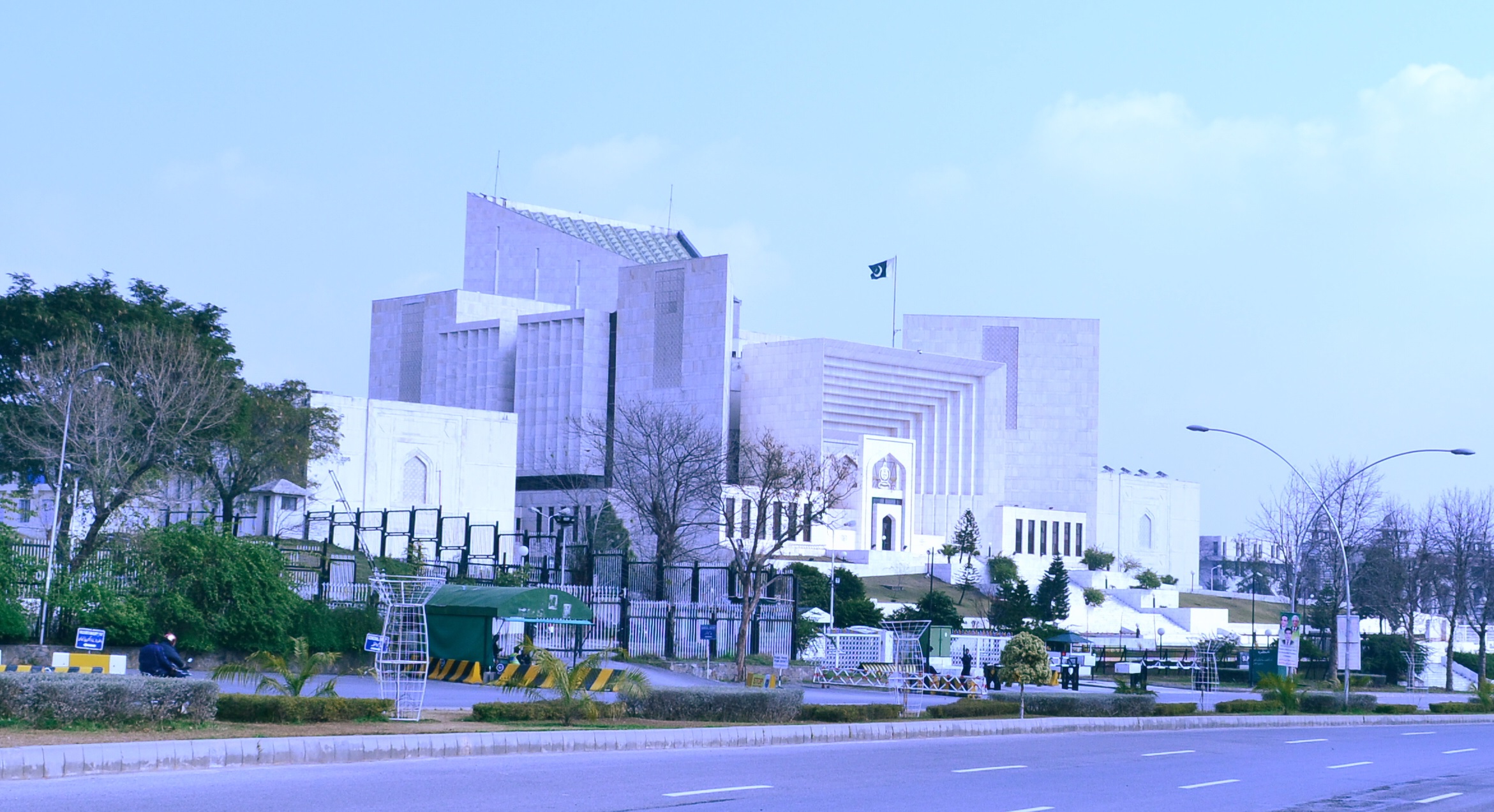

What the Supreme Court said—and what remains disputed
A publicly accessible digitally certified copy of the judgment says the court evaluated the evidence against each brother separately. It accepted a combination of forensic files, domain and account records, personal documents and correspondence as connecting Qaiser to the online material. It found that shared utility registration and office tenancy did not by themselves prove Amoon’s personal involvement. Doubts about Amoon’s alleged laptop recovery and knowledge entitled him to the benefit of the doubt.
That distinction explains the legal outcome. It does not end the factual dispute. Qaiser has maintained that he closed the website in 2009 and that another person later revived it while leaving his identifying information attached. His advocates challenge the reliability and interpretation of the evidence. Those are defense claims, not facts GFM can independently establish.
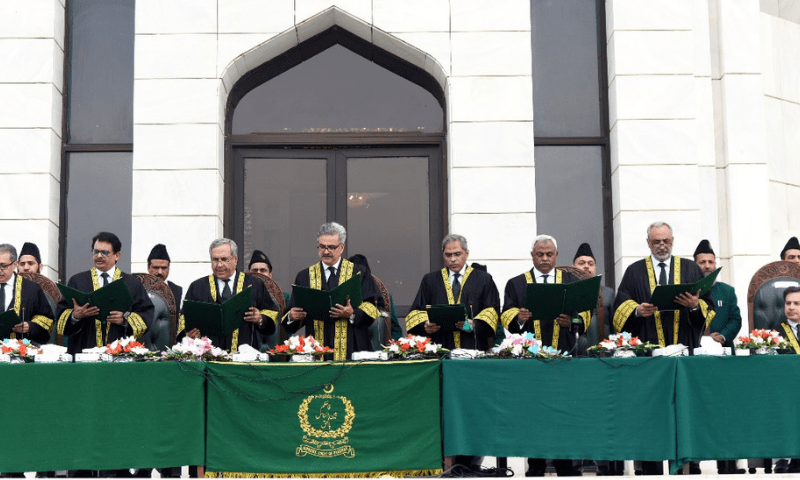
The judgment copy lists the July 6 bench as Chief Justice Yahya Afridi, Justice Shakeel Ahmad and Justice Ishtiaq Ibrahim, with Justice Ibrahim authoring the decision. Pakistan’s state news agency and CLAAS-UK published shorter October 7 reports naming Justice Muhammad Hashim Khan Kakar. Because those public reports conflict, this article relies on the judgment copy for the bench that heard and decided the petitions and records the discrepancy rather than concealing it.
Why digital evidence deserves extraordinary scrutiny
Online cases can create a false sense of certainty. A name on a page is not necessarily proof of authorship. A device can contain copied files. An account may be shared, compromised or used by another person. Metadata can be persuasive, but its meaning depends on how evidence was collected, preserved, authenticated and connected to an individual.
The controlling questions should include:
- Who registered and controlled the relevant domain, hosting account and publishing credentials at the time of the alleged offense?
- Do server logs or platform records identify the person who uploaded the material?
- Was the device imaged and preserved through a documented chain of custody?
- Can investigators distinguish possession of a file from creation or publication?
- Was the evidence independently examined by a qualified defense expert?
- Does the evidence establish intent as well as technical access?
In an ordinary dispute, uncertainty can produce an unjust conviction. In a capital case, it can produce an irreversible death. The higher the punishment, the greater the obligation to test every evidentiary link.
What Pakistan’s blasphemy laws actually say
Pakistan’s official Penal Code places several religion-related offenses in Chapter XV. They are not interchangeable:
Section 295-A
This provision addresses deliberate and malicious acts intended to outrage the religious feelings of a class of citizens by insulting its religion or beliefs. The authorized punishment can extend to ten years’ imprisonment, a fine, or both.
Section 295-B
This provision concerns willfully defiling, damaging, desecrating or derogatorily using a copy of the Quran. The statutory punishment is life imprisonment.
Section 295-C
This provision covers words, representations, imputations, innuendo or insinuations that directly or indirectly “defile” the name of the Prophet Muhammad. The current official text provides death and a fine. Section 295-C was inserted in 1986 with death or life imprisonment as alternatives. A Federal Shariat Court ruling caused the life-imprisonment alternative to cease having effect in 1991, leaving death as the prescribed punishment.
The statute’s breadth is one of the central problems. Section 295-C contains no express requirement of deliberate and malicious intent comparable to Section 295-A. A law carrying death should not depend on elastic terms such as indirect innuendo while offering inadequate protection against mistake, fabrication or manipulated digital material.
Pakistan’s constitutional promise and its legal contradiction
Article 20 of Pakistan’s Constitution says that, subject to law, public order and morality, every citizen has the right to profess, practice and propagate religion, and every religious denomination may manage its institutions. Article 19 recognizes speech and press freedom but permits restrictions including those made in the interest of the “glory of Islam.”
Those provisions reveal the unresolved conflict. Pakistan promises religious practice and expression, yet its criminal law can impose death for expression the state regards as religiously offensive. The country’s leaders do not have to choose between public order and freedom of conscience. They can punish violence, threats, vandalism, fraud and genuine incitement without executing people over disputed religious speech.
When accusation itself becomes punishment
Human Rights Watch reported in June 2025 that blasphemy accusations had been exploited in personal disputes, blackmail, property seizures, forced displacement and economic extortion. Its research documented at least 475 registered cases in 2024. The Centre for Social Justice reported a different total—344 accused people in 2024—because organizations use different definitions and methods. These figures should not be combined or presented as if they measure exactly the same thing.
The danger begins before conviction. An accusation can spread through a neighborhood or social network, produce threats, drive a family from its home and create pressure on police, lawyers and judges. Christians and Ahmadis face particular vulnerabilities, but Muslims have also been accused. A law susceptible to personal vengeance is dangerous to the majority as well as minorities.
Pakistan has not carried out a judicial execution for blasphemy, according to the U.S. State Department and human-rights monitors. That fact matters. It does not make the death sentence symbolic or harmless. Accused people have spent years imprisoned, and individuals accused of blasphemy have been killed by nonstate actors.
The lawyers, officials and reformers placed in danger
Several people are often incorrectly blended together in accounts of these cases. Accuracy honors their courage.
Salman Taseer, the Muslim governor of Punjab, publicly defended Asia Bibi and criticized the blasphemy law. His bodyguard assassinated him on January 4, 2011.
Shahbaz Bhatti, Pakistan’s Christian federal minister for minority affairs, advocated reform and defended religious minorities. He was assassinated on March 2, 2011.
Neither man represented the Ayub brothers. Their deaths demonstrate the danger faced by public officials who challenge misuse of the law.




Rashid Rehman, a Pakistani human-rights lawyer who defended a university lecturer accused of blasphemy, was murdered in May 2014 after receiving threats. His case illustrates the peril faced by defense counsel.
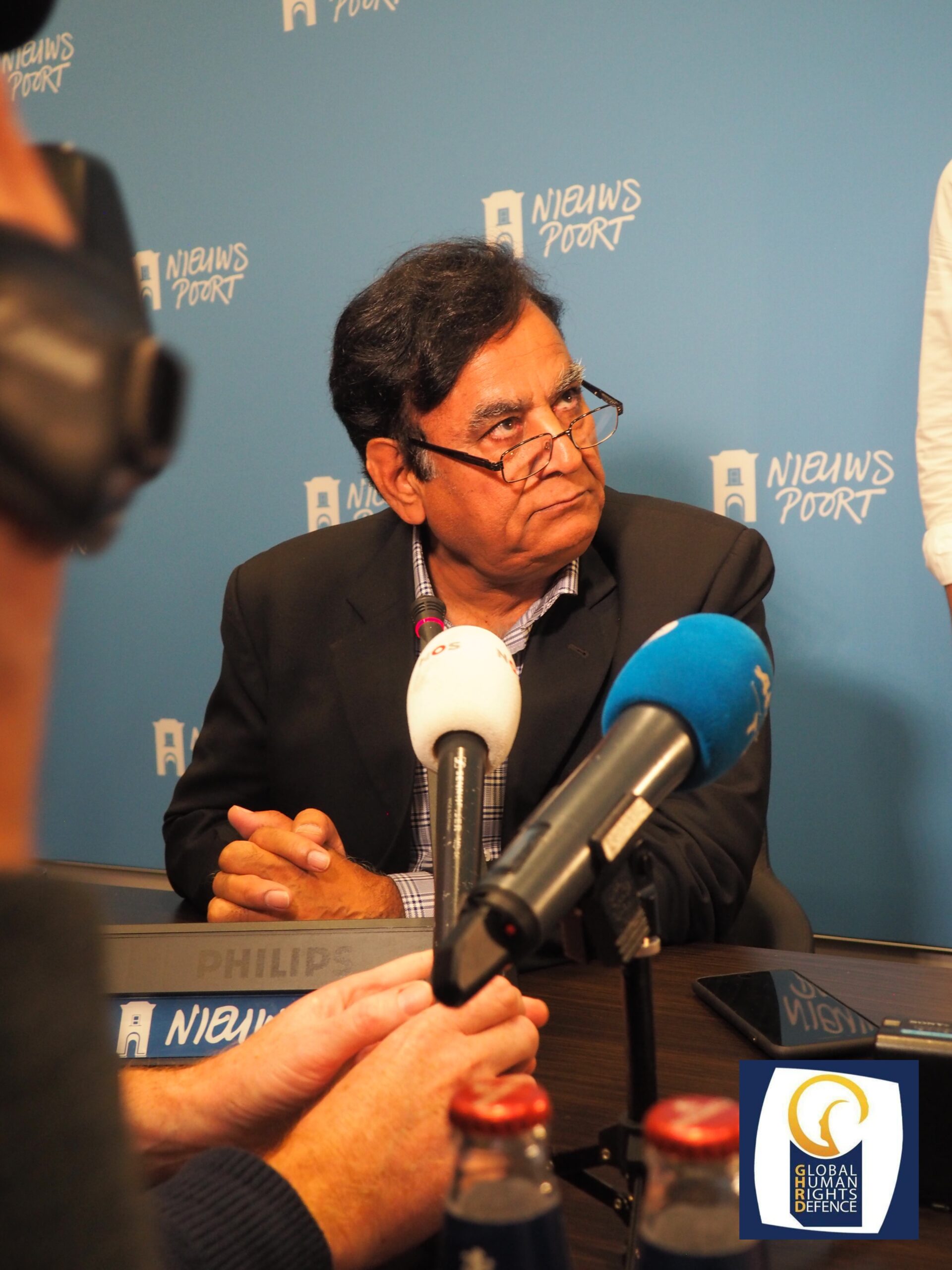
Saif-ul-Malook defended Asia Bibi and later other people accused under blasphemy laws. He faced serious threats but was not assassinated. He was not the Ayub brothers’ attorney. The brothers are represented at the current stage by the Organization for Legal Aid, according to the ACLJ.

Why Section 295-C should change
Respect for religious belief does not require death for religious offense. The state can protect mosques, churches, temples, worshippers and public order without becoming the final judge of theology.
Section 295-C should be repealed. Until repeal is achieved, immediate safeguards should include:
- A moratorium on executions and death sentences for blasphemy-related expression.
- Bail eligibility and protection from prolonged pretrial detention.
- A clear intent requirement and proof of direct personal responsibility.
- Independent forensic review in cases involving digital material.
- Senior-level approval before charges are registered.
- Criminal accountability for knowingly false allegations, blackmail and incitement to violence.
- Security for accused people, their families, judges, witnesses and defense counsel.
- Published data on complaints, charges, dispositions, acquittals, convictions and violence.
The UN Human Rights Committee has said that prohibitions on disrespect for religion, including blasphemy laws, are generally incompatible with the International Covenant on Civil and Political Rights except in the narrow circumstances involving advocacy of hatred that constitutes incitement to discrimination, hostility or violence. In its December 2024 observations on Pakistan, the Committee expressed concern about severe penalties, false accusations, violence and alleged online entrapment.
USCIRF’s 2026 Pakistan chapter recommends repealing blasphemy and anti-Ahmadiyya laws. Until repeal, it urges reforms including making blasphemy bailable, requiring evidence from accusers, senior police investigation, dismissal of unfounded accusations and enforcement against perjury and false complaints.
What Pakistan’s government should do immediately
- Protect Qaiser Ayub’s life and legal rights. Ensure access to counsel, a meaningful review process and protection from extrajudicial harm.
- Protect Amoon Ayub and his family. An acquittal should not lead to hiding, displacement or vigilantism.
- Declare a moratorium. No person should face execution for peaceful religious expression.
- Investigate misuse. Empower an independent body to examine credible allegations of fabricated cases, entrapment, extortion and property seizure.
- Protect courts and counsel. Judges and lawyers must be able to perform their duties without mobs or threats determining outcomes.
- Begin transparent repeal. Parliament should consult minority representatives, Muslim reform advocates, jurists and human-rights experts in a public legislative process.
This appeal is not an attack on Pakistan or on Muslims. Millions of Pakistanis want peace, justice and dignity. Muslim advocates have defended Christians and other minorities, often at great personal cost. Reform would protect them too.
What the United States can—and cannot—do
America cannot dictate the outcome of a Pakistani court. It can, however, place religious freedom and due process at the center of its bilateral relationship.
The State Department can raise Qaiser’s case directly, request information about his safety and legal remedies, and press for measurable reforms. Congress can hold hearings, send bipartisan letters, adopt resolutions, meet Pakistani officials and make religious-freedom concerns part of oversight of aid and security cooperation. USCIRF recommends targeted accountability measures and a binding agreement with benchmarks under the International Religious Freedom Act.
U.S. officials should also distinguish advocacy from collective condemnation. Pakistan is a diverse nation. Muslims are not collectively responsible for a law, a court decision or mob violence. Effective diplomacy identifies specific laws, actors and remedies.
What this means for religious freedom in America
The First Amendment protects both the free exercise of religion and freedom of speech. Christians may proclaim Jesus Christ. Muslims may practice Islam. People may criticize Christianity, Islam or any other belief. Government may punish true threats, criminal conduct and incitement under constitutional standards, but it may not create a blasphemy code to protect religious ideas from criticism.
Immigration does not suspend the Constitution. A person coming from a country with blasphemy restrictions does not bring that country’s criminal law into the United States. American Muslims possess the same rights—and owe obedience to the same civil law—as Christians, Jews, Hindus, atheists and everyone else.
The legitimate American concern is therefore not whether Islam should be “allowed.” The Constitution already protects religious practice. The concern is whether any movement, religious or secular, attempts to use intimidation or government power to restrict the speech and conscience of others. The answer must remain the same for every group: peaceful belief is protected; coercion and violence are not.
Christians weaken their own case if they ask for freedom only for themselves. Defending a Muslim’s legal right to worship does not require agreement with Islamic theology. Opposing a blasphemy law does not require mocking Muslims. A principled defense of conscience protects all people while allowing honest evangelism and theological disagreement.
A Christian appeal from the heart
Hebrews 13:3 tells believers to remember prisoners as though chained with them. Isaiah 1:17 calls God’s people to seek justice and defend the oppressed. Jesus commanded His followers to love their neighbors and enemies.
Those scriptures do not call Christians to silence. They call us to speak truth without hatred, defend life without dehumanizing others, and oppose persecution without manufacturing fear.
Jesus Christ did not commission His followers to manufacture belief through fear. Faith produced by threat is not faith. A government can compel outward words; it cannot command the human heart.
What readers can do now
- Read the sources before sharing claims or images.
- Contact elected representatives respectfully and ask them to raise Qaiser’s case and Pakistan’s blasphemy laws.
- Support reputable legal and religious-freedom organizations working with verified cases.
- Pray for Qaiser, Amoon, their families, their counsel, Pakistan’s judges and government leaders.
- Reject anti-Muslim hatred while firmly opposing coercive religious laws.
- Share this investigation using its canonical GFM link so readers can see the sources and future corrections.
Continue learning with GFM
Read GFM’s documented account of Asia Bibi’s eight years under a death sentence and our broader analysis of Christian persecution and minority protections in Pakistan in 2026. For practical guidance on helping vulnerable families without exploiting their stories, see How to Help Families in Pakistan Responsibly.
Get GFM Field Updates for new reporting and verified mission news. Review our Trust & Accountability commitments, contact GFM about partnerships or corrections, or support the mission.
Sources and further reading
- Publicly accessible judgment copy and analysis: Amoon Ayub and Qaiser Ayub v. The State, decided October 7, 2026
- Associated Press of Pakistan report, October 7, 2026
- ACLJ case update, October 20, 2026
- CLAAS-UK case update, October 8, 2026
- Pakistan Ministry of Law and Justice: Pakistan Penal Code, including Sections 295-A, 295-B and 295-C
- National Assembly of Pakistan: Constitution of Pakistan
- Human Rights Watch, “A Conspiracy to Grab the Land,” June 2025
- UN Human Rights Committee concluding observations on Pakistan, December 2, 2024
- USCIRF 2026 Annual Report: Pakistan chapter
- U.S. Supreme Court, official U.S. Reports collection, including Joseph Burstyn, Inc. v. Wilson
Editorial disclosure: This article combines public court records, official legal texts, attributed reporting and explicit advocacy for reform. GFM did not interview the brothers, their families, counsel or Pakistani officials, and did not independently examine the forensic devices. Defense assertions are identified as assertions. The review-petition status and the brothers’ current circumstances should be rechecked as new records emerge. The photographs are authentic or official-source editorial images and are captioned with their context; no generated portrait is presented as a real person.