
Pakistan’s Constitution contains protections for religious freedom, and government officials regularly affirm that Christians, Sikhs, Hindus and other minorities are entitled to equal citizenship. At the same time, independent human-rights monitors continue to document serious religious-freedom violations, including blasphemy prosecutions, mob violence, intimidation and failures to hold perpetrators accountable.
Those two realities must be considered together.
For Christians in Pakistan, the question is not whether there are government programs or legal guarantees on paper. The deeper question is whether those protections consistently reach people in villages, neighborhoods, workplaces, police stations and courtrooms when accusations or violence occur.
Global Freedom Mission believes this issue deserves careful reporting rather than slogans. The goal of this article is to examine what credible evidence shows in 2026, recognize constructive reforms where they exist, and identify the areas where stronger protection and accountability are still needed.
Pakistan’s government says religious freedom is protected
Pakistan’s public position is clear: religious minorities are protected under the Constitution and should be treated as equal citizens.
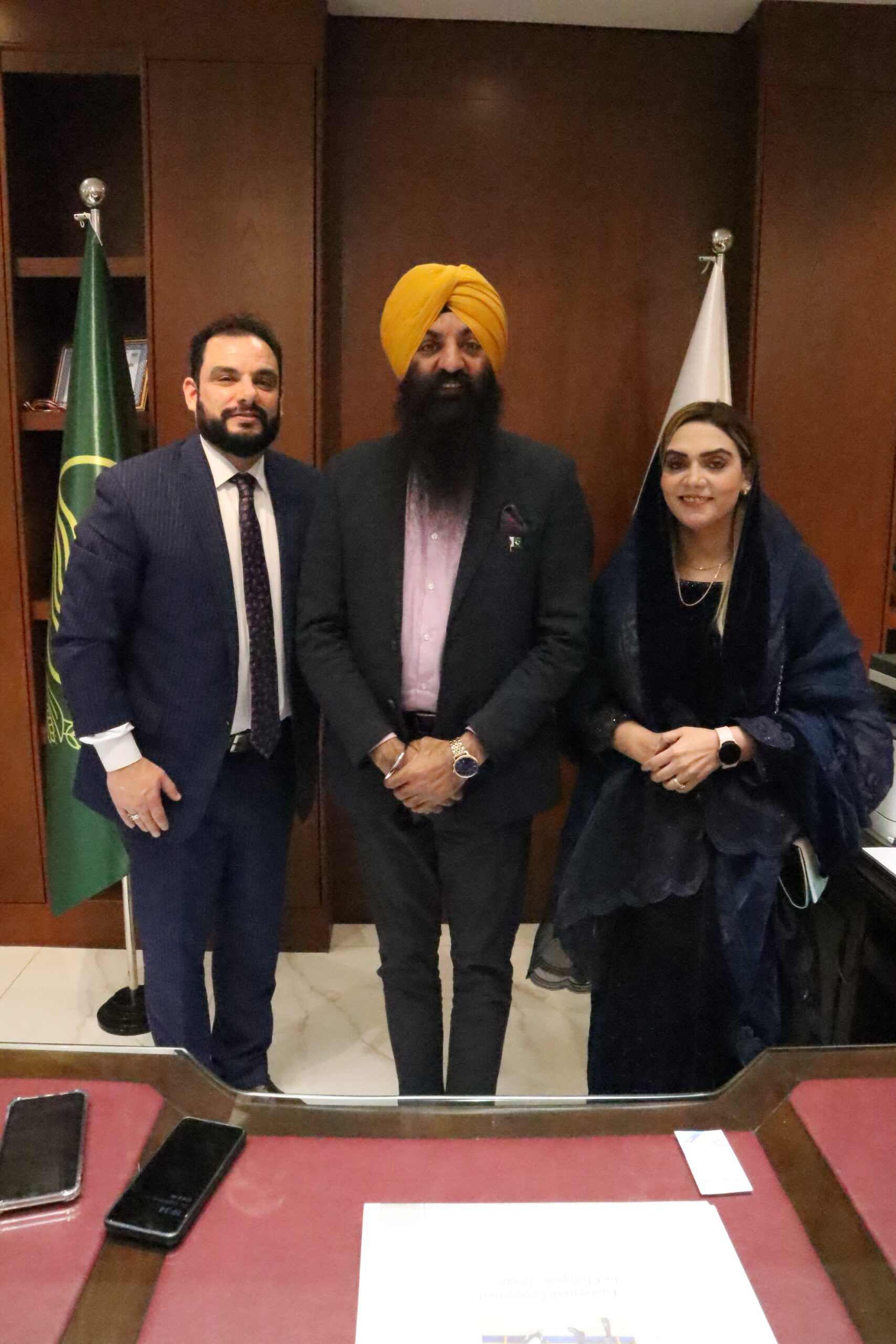
In September 2026, Punjab Minister for Minority Affairs Sardar Ramesh Singh Arora said publicly that Pakistan’s Constitution guarantees religious freedom to every citizen and described the country as committed to minority rights and interfaith harmony. Provincial officials have also highlighted minority-welfare programs, protection of places of worship and financial-assistance initiatives.
At the federal level, Pakistan enacted the National Commission for Minorities Rights Act, 2025. The National Assembly lists the measure as Act No. XL of 2025. According to Pakistan’s Senate, the law was promulgated on December 18, 2025 and is intended to protect and promote the social, economic, political and legal rights of minorities.
That is an important institutional development. But implementation matters.
The commission itself faced implementation delays
In a 2026 Senate committee update, Pakistan’s Ministry of Human Rights explained the planned composition of the new National Commission for Minorities Rights. The same update stated that, despite formal requests and reminders issued in January 2026, nominations from provincial governments and the Islamabad Capital Territory were still awaited. The committee expressed concern about the delay and called for the process to move faster.
This illustrates a recurring problem in minority-rights policy: passing a law is only the beginning. Institutions need appointments, budgets, authority, cooperation and measurable enforcement if legal protections are going to change conditions on the ground.
Independent monitors continue to report serious religious-freedom concerns
The picture presented by independent monitoring organizations remains much more troubling.
The U.S. Commission on International Religious Freedom’s 2026 annual report said religious-freedom conditions in Pakistan continued on a troubling trajectory during 2025. USCIRF cited continuing enforcement of blasphemy laws, vigilante attacks and mob violence affecting religious minorities, including Christians and Ahmadiyya Muslims.
Human Rights Watch’s World Report 2026 likewise reported that blasphemy-related attacks on religious minorities increased during 2025 and argued that discriminatory legislation and government inaction left minorities vulnerable. Human Rights Watch also reported continuing failures to hold perpetrators of blasphemy-related mob and vigilante violence accountable.
These findings do not mean every Pakistani official supports persecution. They do mean that constitutional promises and government initiatives must be measured against documented outcomes.
Blasphemy laws remain one of the greatest religious-freedom concerns
Pakistan’s blasphemy provisions remain among the most serious concerns raised by international religious-freedom monitors.
USCIRF reported in 2026 that the laws continue to affect people of multiple faiths and highlighted cases involving Christians. The commission also said the combination of blasphemy accusations, criminal penalties and mob pressure contributes to fear among minority communities.
The danger is not confined to a courtroom. An accusation itself can trigger threats, displacement, violence or long-term social consequences even when a person is later acquitted.
Misuse allegations have also become a legal issue inside Pakistan
Human Rights Watch reported that Pakistan’s statutory National Commission for Human Rights had identified hundreds of cases it described as false blasphemy charges connected to an alleged organized scheme of blackmail and extortion.
In 2025, an Islamabad High Court judge ordered the federal government to establish an inquiry commission to examine alleged misuse of blasphemy laws. A two-judge bench later suspended implementation of that order while appeals were considered. The legal dispute itself is significant because it shows that concern about misuse is not limited to international advocacy groups; it has also reached Pakistan’s courts.
Any criminal law carrying severe penalties demands rigorous due process, credible evidence and safeguards against retaliation, false accusation and vigilante violence.
Christians face risks beyond formal prosecution
Religious persecution is not limited to criminal cases. Christians and other minorities may also face threats connected to employment, housing, poverty, social exclusion, mob violence or unequal access to justice.
That vulnerability becomes especially serious when religious minority status overlaps with poverty.
Global Freedom Mission’s work in Pakistan has brought us into communities where families face several forms of hardship at once. Some families struggle with unsafe water. Others face barriers to education, food security or reliable income. In brick-kiln communities, debt and labor exploitation can add another layer of vulnerability.
This is why religious freedom cannot be separated completely from economic dignity, access to justice and basic human needs.
Learn more about GFM’s work concerning bonded labor and vulnerable communities in Pakistan.
Government action should be measured by protection, enforcement and accountability
There are legitimate reasons to recognize steps Pakistan has taken. The creation of a statutory minority-rights commission, provincial welfare programs, security around some minority religious events and public commitments by government officials are real actions.
But those actions should not end the conversation.
For Christian families who fear a false accusation, mob attack or discrimination, the most important questions are practical:
- Will police intervene quickly when a minority community is threatened?
- Will people accused of crimes receive due process rather than mob justice?
- Will those who organize or participate in violence be investigated and prosecuted?
- Will churches and minority neighborhoods receive meaningful protection when threats are credible?
- Will minority-rights institutions have enough independence and authority to investigate complaints?
- Will poverty and social exclusion be addressed in communities where vulnerability increases the risk of exploitation?
A government’s commitment to religious freedom is ultimately demonstrated through consistent protection and equal enforcement of the law.
Religious freedom and bonded labor can intersect
Another issue that deserves deeper attention is the relationship between religious minority status, poverty and exploitative labor.
The International Labour Organization has documented serious decent-work deficits in Pakistan’s brick-kiln supply chain, including concerns involving bonded labor and child labor. The ILO has also highlighted weaknesses in labor inspection, enforcement capacity and social-protection coverage.
Historically, Christian families have been among the communities working in Pakistan’s brick-kiln sector, although bonded labor affects people from multiple religious and social backgrounds.
Ending exploitation therefore requires more than rescuing one worker or paying one debt. Long-term solutions can include stronger enforcement, documented wages, transparent debt records, worker registration, social protection, education, vocational opportunity and safe alternatives to exploitative employment.
Modernizing brick production may also have a role. Mechanized clay preparation, automated molding, conveyors and safer material-handling systems can reduce dependence on some forms of dangerous manual labor. But technology alone cannot end bonded labor. Any modernization strategy must include protections against worker displacement and create pathways to better jobs, education and alternative livelihoods.
What meaningful progress would look like
Pakistan has the legal and institutional capacity to make measurable progress. The following steps would strengthen confidence in minority protections:
1. Fully implement the National Commission for Minorities Rights
The commission should be fully constituted, adequately funded and able to investigate complaints and publish meaningful findings.
2. Strengthen safeguards surrounding blasphemy accusations
Authorities should protect due process, investigate false accusations and act against incitement or mob violence without regard to the victim’s religion.
3. Hold perpetrators of religiously motivated violence accountable
Protection cannot depend solely on public statements after an attack. Investigation, prosecution and prevention matter.
4. Address the economic vulnerability that increases exploitation
Minority families living in poverty need access to education, documentation, safe work, clean water, social protection and legal remedies.
5. Make government progress measurable
Publishing enforcement statistics, prosecutions, convictions, minority-rights complaints and institutional responses would make it easier for the public to evaluate whether protections are working.
Why Global Freedom Mission will keep reporting on this
Global Freedom Mission works in Pakistan because the people affected by these issues are not statistics to us. They are families, children, workers, pastors, neighbors and communities with dignity and value.
Our role is not to condemn an entire country or an entire people. Pakistan is home to millions of people who want peace, religious harmony and justice. There are also government officials, faith leaders, advocates, journalists and ordinary citizens working toward those goals.
Our responsibility is to tell the truth about what is happening, document what we can verify, recognize genuine progress, and speak clearly when vulnerable people remain unprotected.
That means reporting carefully. It means refusing to exaggerate. And it means continuing to call for equal protection of Christians and every religious minority under the law.
Learn more and take the next step
Learn more: Explore Global Freedom Mission’s humanitarian work in Pakistan, including our work related to bonded labor and vulnerable communities, clean-water assistance and children and education.
Read firsthand field reporting: Visit Stories From the Field to see verified updates and firsthand accounts from GFM’s work.
Get future reports: Sign up for Global Freedom Mission Field Updates to receive new reporting, field stories and practical ways to help.
Support the mission: If you would like to help GFM continue humanitarian work, education, advocacy and practical assistance in Pakistan, visit Support Global Freedom Mission.
Questions or partnership inquiries: Contact Global Freedom Mission.
Sources and further reading
- U.S. Commission on International Religious Freedom, 2026 Annual Report: Pakistan
- Human Rights Watch, World Report 2026: Pakistan
- National Assembly of Pakistan: National Commission for Minorities Rights Act, 2025
- Senate of Pakistan: implementation briefing on the National Commission for Minorities Rights Act
- Radio Pakistan: September 2026 statement by Punjab Minister for Minority Affairs Sardar Ramesh Singh Arora
- International Labour Organization: brick-kiln supply chain and fundamental labor rights
Editorial note: This article combines official Pakistani government sources with independent human-rights reporting. Statements attributed to government officials represent those officials’ positions. Findings from USCIRF, Human Rights Watch and the ILO are attributed to those organizations. Global Freedom Mission does not treat allegations as established fact unless supported by sufficient evidence.