
When people search for ways to help families in Pakistan, the need can feel overwhelming. Clean water, education, food insecurity, bonded labor, disaster recovery, and the lack of stable income are deeply connected. The most responsible response is not to promise a simple fix. It is to understand the need, support work that can be documented, and invest in practical steps that protect dignity while building longer-term opportunity.
Global Freedom Mission works in Pakistan through trusted relationships, verified needs, practical humanitarian assistance, education, clean-water support, and pathways toward greater stability. This guide explains what responsible support can look like and what donors should ask before giving.
1. Start with verified needs, not emotional claims
Humanitarian stories matter, but responsible giving should begin with facts. UNICEF reports that an estimated 25.1 million children ages 5–16 are out of school in Pakistan. WaterAid Pakistan reports that millions of people still lack reliable clean water and sanitation. The International Labour Organization has documented serious labor-rights problems in Pakistan’s brick-kiln sector, including bonded labor and child labor concerns.
Those realities are significant enough without exaggeration. A trustworthy organization should distinguish between what it has personally documented, what reputable outside sources report, what work is currently active, and what remains a future goal.
Helpful sources: UNICEF Pakistan: Education, WaterAid Pakistan, and ILO research on Pakistan’s brick-kiln sector.
2. Clean water support should match the actual problem
“Clean water” can mean many different interventions. A household may need an individual filter. An existing well may need a pump. A school may need water, sanitation, and hygiene facilities. A village may eventually need a properly designed water system or new well.
These are not interchangeable projects. The right solution depends on water quality, local infrastructure, maintenance, community ownership, cost, and technical feasibility.
Global Freedom Mission’s documented clean-water assistance has included individual water filters and pumps for existing water wells. Constructing new community freshwater wells remains a future goal and should only be described as completed when the project is actually funded, implemented, and documented.
Learn more about GFM’s clean-water work and review Trust & Accountability.
3. Education support should address the barriers keeping children out of school
School access is not only about tuition or books. Families may face transportation costs, unsafe facilities, lack of water and sanitation, poverty, household labor demands, or displacement. UNICEF’s Pakistan education program emphasizes that access, retention, learning quality, and equity all matter.
Responsible education support can include learning materials, school-related assistance, support for families facing barriers to attendance, safer learning environments, and practical pathways for older youth and adults.
Explore GFM’s children and education work and broader education initiatives.
4. Food and emergency relief matter, but they should connect to a path forward
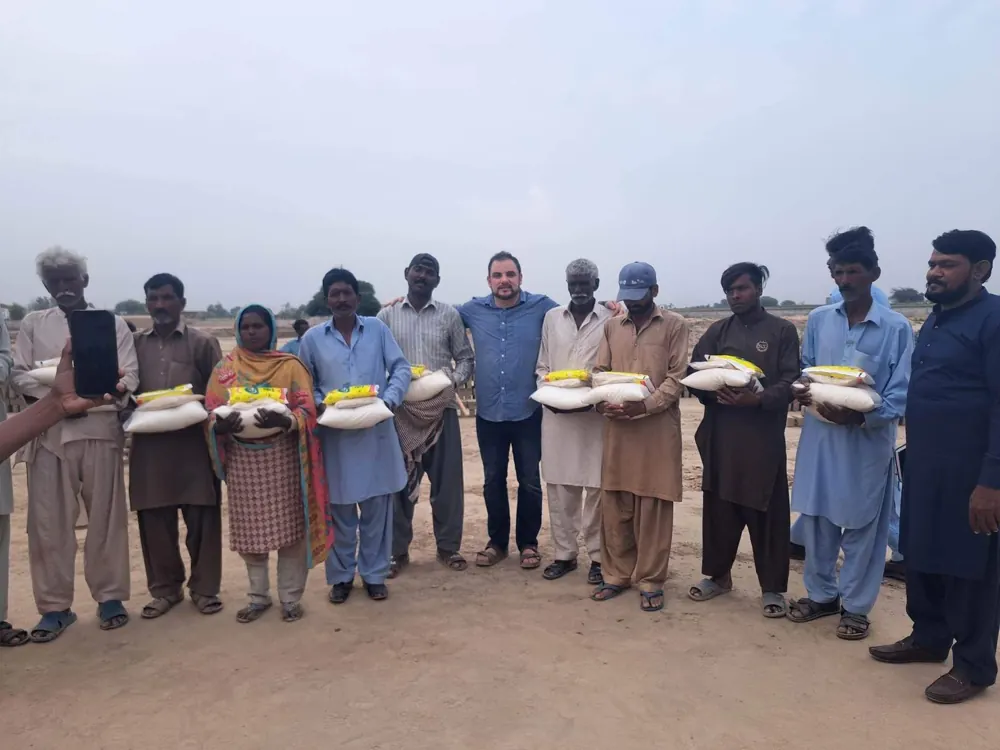
Emergency assistance can be life-giving when a family is facing hunger, displacement, illness, or another immediate crisis. Food, clothing, medical assistance, seasonal support, and other practical care can stabilize a family during a difficult moment.
But long-term poverty rarely ends through one distribution alone. Whenever possible, relief should connect with education, skills, livelihoods, and other opportunities that reduce repeated dependence.
That is why GFM describes its humanitarian approach as immediate help connected to longer-term dignity and opportunity. See Food & Humanitarian Relief and Economic Empowerment.
5. Be careful with claims about bonded labor
Pakistan’s brick-kiln sector has been documented by the ILO and other institutions as an area where debt, labor exploitation, weak enforcement, and child-labor risks can intersect. These situations are legally, financially, and socially complex.
Donors should be cautious when any organization makes a simple promise that a specific amount of money will automatically “free a family.” A legitimate intervention may require legal review, accurate debt records, protection planning, safe housing, livelihood support, education, and follow-up. The details matter.
GFM’s current public work focuses on documented humanitarian assistance, awareness, education, practical support, and long-term pathways toward greater freedom and stability. Read our overview of bonded labor and vulnerable communities and our verified field stories.
6. Look for transparency before you give
Before supporting any nonprofit, ask practical questions:
- Is the organization’s legal identity clear?
- Does it explain what has actually been completed versus what is planned?
- Does it use real photographs and protect the dignity of the people shown?
- Does it avoid fabricated beneficiary numbers, guaranteed outcomes, and exaggerated impact claims?
- Can you see how to contact the organization?
- Are donation methods, policies, and accountability information easy to find?
Global Freedom Mission is a U.S. 501(c)(3) nonprofit organization. Our public accountability materials explain how we describe completed work, active programs, future goals, and field documentation. Review Trust & Accountability before you give.
7. Choose the kind of impact you want to support
There is no single correct way to help. One donor may care most about food relief. Another may want to support education. Someone else may be drawn to clean-water assistance, livelihood tools, or long-term community development.
The important question is whether the support is tied to a real need and whether the organization communicates honestly about what the gift can and cannot accomplish.
A practical next step
If you are considering helping families in Pakistan, start by learning before giving. Read the organization’s field stories. Review its accountability information. Understand the difference between immediate assistance and future development goals. Then choose a level of support that is sustainable for you.
Global Freedom Mission invites supporters to give with purpose, not pressure. Explore current priorities on Support Global Freedom Mission, review Stories From the Field, or contact GFM if you have questions about programs, partnerships, or giving.
Get Global Freedom Mission Field Updates
Want new field stories, humanitarian reporting, and practical ways to help delivered to you? Sign up for Global Freedom Mission Field Updates and stay connected to new work and reporting from Pakistan.
Editorial note: This article uses external humanitarian sources for broader Pakistan context and clearly separates those findings from Global Freedom Mission’s firsthand field activity. GFM does not claim responsibility for projects or outcomes reported by UNICEF, WaterAid, or the ILO.