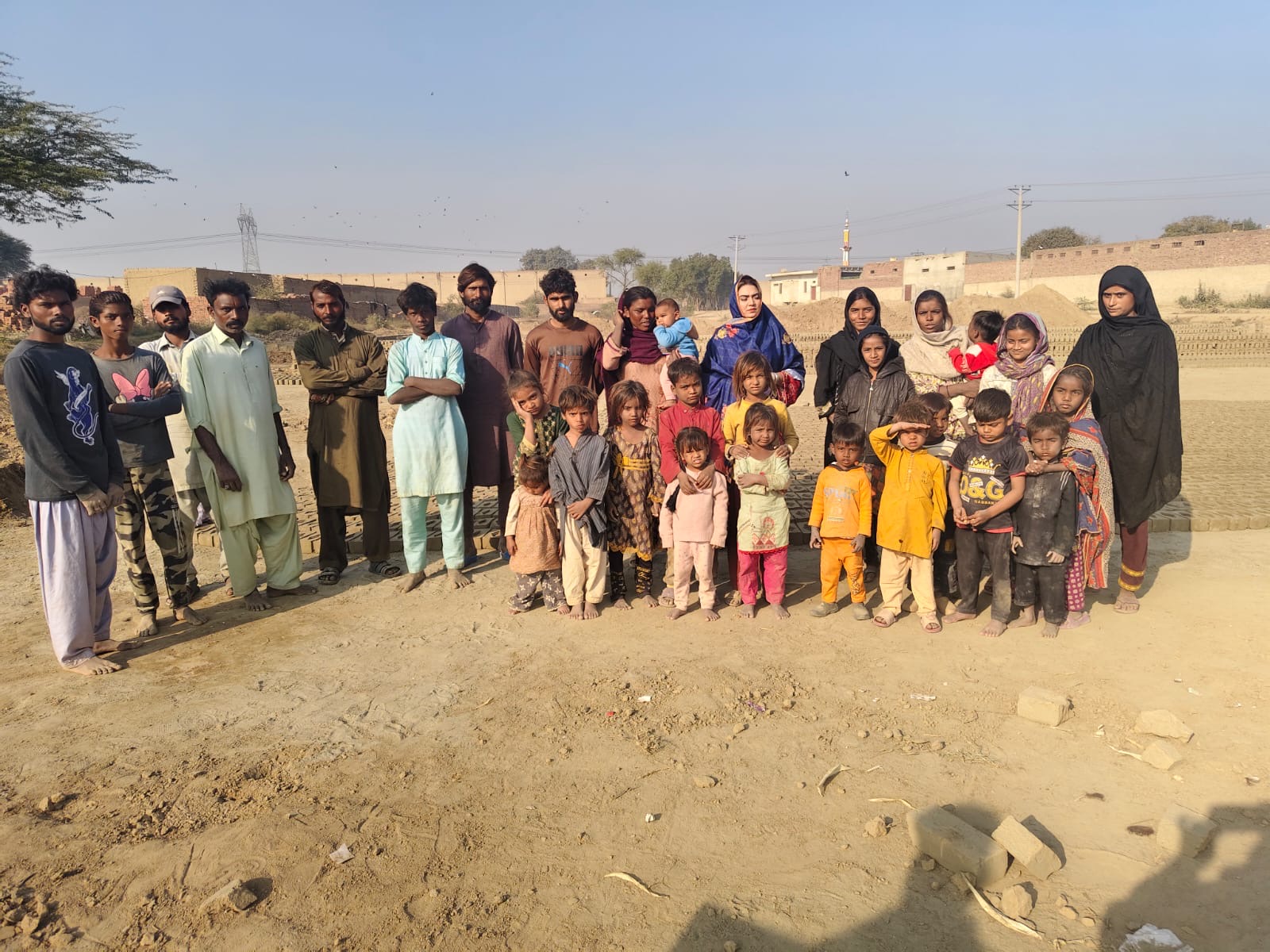

Pakistan has outlawed bonded labor. Yet in parts of the country’s brick-kiln economy, families can still become trapped by debt, poverty, weak documentation, coercion and generations of limited opportunity.
AN ESTIMATED 700,000 PEOPLE COULD BE CAUGHT IN BONDED-LABOR SYSTEMS ACROSS MORE THAN 4,000 BRICK KILNS IN PAKISTAN.
That estimate comes from Pakistan’s National Commission for Human Rights and is cited in supervisory material from the International Labour Organization. Behind that number are people and families: mothers, fathers and children living in communities where poverty, debt and limited opportunity can become a cycle that lasts for generations.
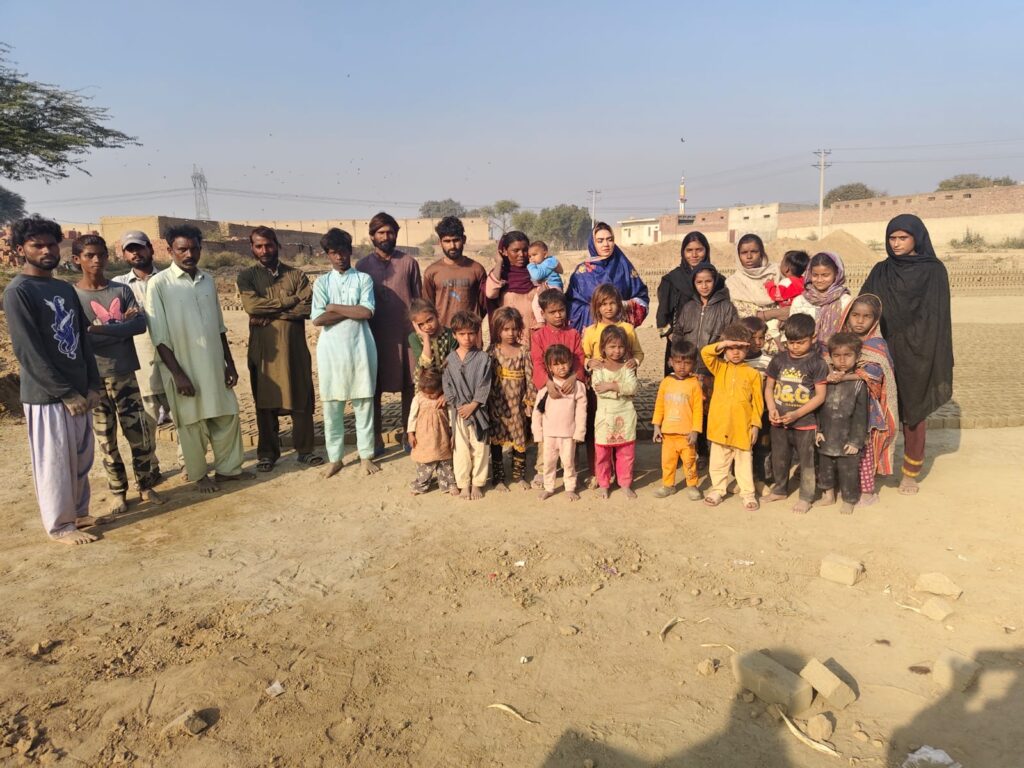
For Global Freedom Mission, this is not an issue encountered only in reports. It is something our team has witnessed in Pakistan. We have met families living and working around brick kilns, seen children growing up in these environments, attempted to assist families who wanted to leave, and taken concerns about vulnerable communities directly to government leadership in Punjab.
This article brings those firsthand experiences together with Pakistani law, International Labour Organization research, findings cited by Pakistan’s National Commission for Human Rights, and recent developments in Punjab.
One distinction is important from the beginning: not every person working at a brick kiln is a bonded laborer. Brickmaking provides a livelihood for many families. The concern is where work crosses the line into coercion, unlawful debt bondage, restrictions on leaving, child labor, threats, violence or intergenerational exploitation.
Bonded Labor Is Already Illegal in Pakistan
The starting point must be clear: Pakistan already has laws against bonded labor.
The Bonded Labour System (Abolition) Act, 1992 abolished the bonded-labor system and freed bonded laborers from obligations to perform bonded labor. The law also addresses bonded debt, including prohibiting a creditor from accepting payment against bonded debt extinguished under the Act.
Punjab also has legislation addressing child labor at brick kilns. The problem, therefore, is not simply the absence of laws. The harder question is whether the protections written into law consistently reach vulnerable workers and families on the ground.
How Large Is the Problem?
International Labour Organization supervisory material cites a 2023 report from Pakistan’s National Commission for Human Rights estimating that approximately 700,000 people could be caught in bonded-labor systems across more than 4,000 brick kilns in Pakistan.
The same supervisory material describes bonded labor as a broader national problem affecting more than 3 million people across multiple sectors.
An ILO study focused specifically on Pakistan’s brick-kiln supply chain identified continuing challenges involving bonded labor and child labor. Among the enforcement problems identified were limited labor-inspection reach, insufficient numbers of inspectors, and capacity and resource constraints.
Brickmaking itself is not slavery. The issue is whether a worker remains free to make meaningful choices about employment, movement and debt, or whether debt and coercion are being used to take those choices away.
Not Every Brick-Kiln Worker Is a Bonded Laborer
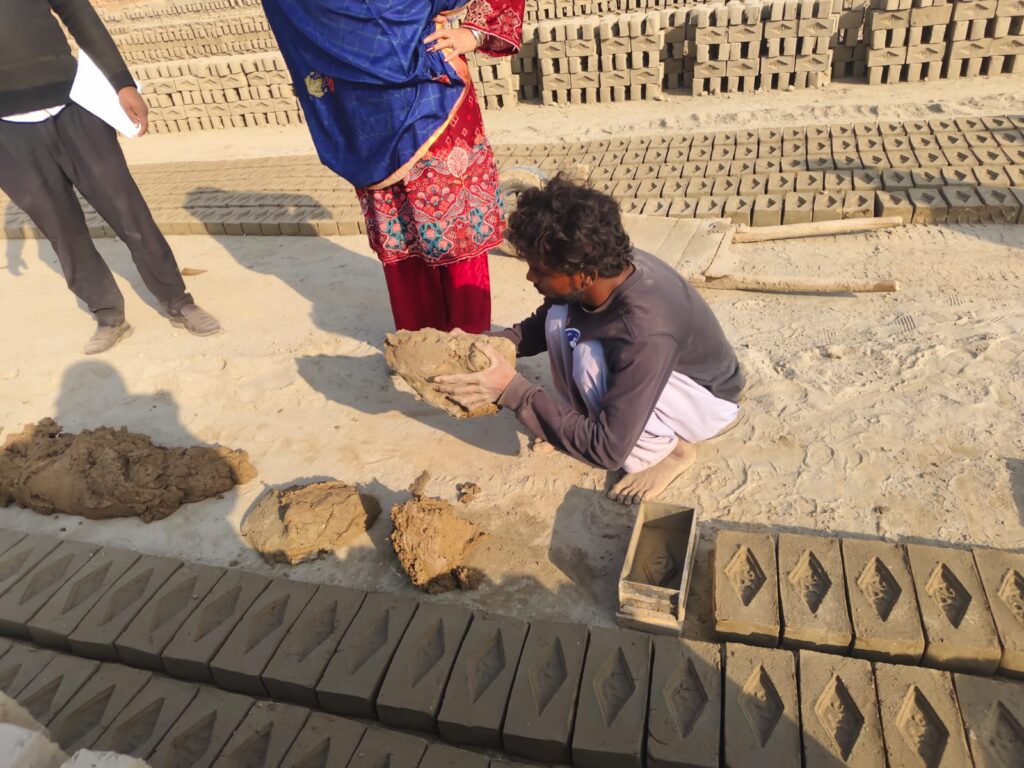
This distinction matters deeply to Global Freedom Mission. Some men and women work in brickmaking because it is their trade and livelihood. Poverty and difficult work alone do not establish bonded labor.
Bonded labor is different. Warning signs can include workers being prevented from leaving, threats or violence, debts they cannot independently verify, wages controlled through opaque accounting, coercion connected to an advance, children being pulled into a family’s obligation, or debts that effectively continue from one generation to another.
Our goal is not to condemn Pakistan’s entire brick industry. We want to confront genuine exploitation while respecting men and women who freely choose brickmaking as their occupation.
When Debt Becomes Control
Brick-kiln debt can begin with something painfully ordinary. A family needs food. Someone becomes sick. Rent is due. A medical emergency happens. There is no money available.
An advance, commonly described as peshgi, can create a relationship in which wages and debt are controlled by someone else. When accounting is unclear and a worker cannot realistically leave, an ordinary financial emergency can become something far more serious.
For Global Freedom Mission, Proverbs 22:7 has taken on a painful meaning in these communities:
“The borrower is servant to the lender.”
Debt itself is not slavery. But when debt is used to control someone’s labor, restrict a family’s ability to leave, perpetuate obligations workers cannot independently verify, or pull children into the same cycle, those words become frighteningly tangible.
Children Born Into the Cycle
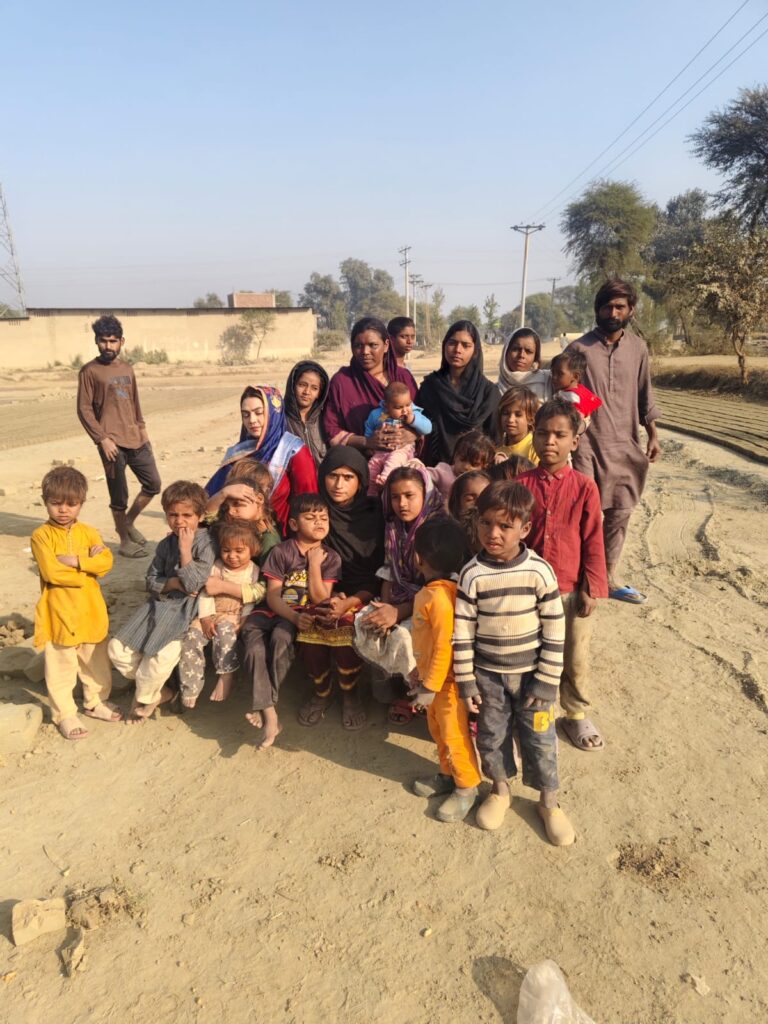
Perhaps nothing weighs more heavily on our hearts than the children.
Babies and little children can be born into families already carrying debt connected to kiln work. They grow up beside the brick fields, surrounded by the same poverty and obligations affecting their parents.
Before they are old enough to understand debt, employment or freedom, circumstances they never chose can begin determining the direction of their lives.
The International Labour Organization has documented child labor as a serious concern in Pakistan’s brick-kiln sector. Research has described children performing hazardous work involving heavy loads, long working hours, prolonged squatting and exposure to dust.
Not every baby or toddler living at a kiln is physically making bricks. The deeper injustice is the cycle itself. A child can be born into a household already burdened by debt and grow toward working age with limited schooling, limited documentation, few economic alternatives and enormous pressure to enter the same work.
A baby cannot consent to a family debt. A little child cannot choose bondage. Children should never inherit a future defined by an obligation created before they were old enough to understand it.
When children begin working at kilns, time spent molding, carrying, stacking or moving bricks can replace time in school. Dust, heat, heavy loads and long hours can threaten health and development. When education is lost, those children can enter adulthood with fewer choices, making the cycle even harder to escape.
Documentation matters too. Identity documents, school enrollment and access to social protection can help open doors that would otherwise remain closed.
Born at the kiln. Raised at the kiln. Working at the kiln. And for some families, another generation begins the same way.
That is the cycle Global Freedom Mission wants to help break.
What Global Freedom Mission Witnessed
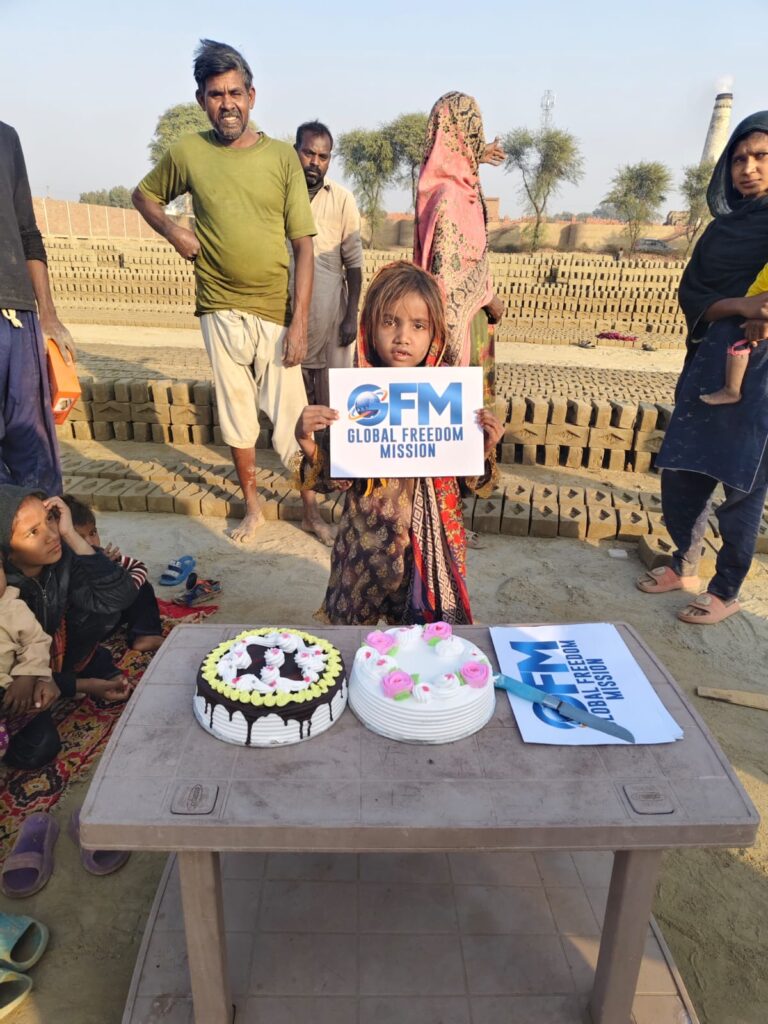
Global Freedom Mission’s concern became personal during field work in Pakistan.
During one incident, our team went to a brick-kiln site believing we could help people who wanted freedom from bondage. According to the firsthand account of GFM leadership, the situation escalated rapidly. Armed individuals threatened our videographer, a family member traveling with the group was assaulted, and our team feared for its safety and left the area. Pakistani security personnel later arrived in two vehicles, and the situation became far larger than anyone had expected.
That experience changed how we thought about the problem.
We realized that lasting intervention is more complicated than arriving at a kiln, handing someone money and announcing that a family has been freed. GFM leadership says officials subsequently explained that brick kilns are operating businesses and interventions must be handled through appropriate processes rather than simply removing workers from a workplace.
That encounter did not make us want to walk away.
It made us realize that we needed a better strategy.
Why Global Freedom Mission Is Involved
Global Freedom Mission did not enter these communities because bonded labor is an interesting issue to study.
We became involved because we encountered real families living beside the kilns and real children growing up in circumstances they did not choose.
Once you have stood there, looked into the faces of those children and listened to families describe their lives, it becomes difficult to reduce the problem to statistics.
Our name contains the word Freedom, and we believe that word has to mean something practical.
Freedom is not merely walking away from a brick kiln.
Freedom means an unlawful debt no longer controls your future.
Freedom means parents can work without coercion.
Freedom means having identification documents.
Freedom means children can go to school.
Freedom means having somewhere safe to live while rebuilding.
Freedom means being able to feed your family without immediately becoming trapped in another desperate debt.
Freedom means knowing your legal rights and having access to help when those rights are violated.
And freedom means still being free six months, two years and ten years later.
That is why our thinking has moved beyond the idea of a single dramatic rescue. We want to address the conditions that allow bondage to continue and the vulnerabilities that can pull a family back into it.
Why Simply Paying a Claimed Debt Is Not Enough
One common humanitarian approach is to raise money to pay a brick-kiln family’s claimed debt. Some organizations report using this approach as part of broader rehabilitation programs.
But Pakistan’s bonded-labor law raises an important legal issue. When a debt legally qualifies as bonded debt extinguished under the Bonded Labour System (Abolition) Act, the Act prohibits a creditor from accepting payment against that extinguished debt.
That means responsible humanitarian work must ask more than:
“How much does the kiln owner say this family owes?”
We should also be asking:
- Is this family actually in bonded labor?
- Does the family want to leave?
- How was the claimed debt calculated?
- Can the family independently verify the amount?
- Is the debt legally enforceable?
- Is legal intervention necessary?
- Where will the family live after leaving?
- How will the adults earn a stable income?
- Will the children enter school?
- Does the family have identification documents?
- What protection is available if threats occur?
- Six months or two years later, is the family still free?
Getting someone away from a kiln for one day is not the same thing as creating lasting freedom.
Accountability Must Apply to Rescue Efforts Too
Global Freedom Mission believes vulnerable families should never become fundraising props.
When money is raised in the name of helping a family, compassion should be accompanied by accountability. Supporters should be able to understand the intervention, the safeguards surrounding it, how resources were used and what happened afterward without exposing private information that could endanger the people being served.
A responsible program should be able to explain how a family’s circumstances were assessed, how funds were handled, what assistance was provided after leaving and how longer-term outcomes are followed.
Freedom should be measured by what happens after the photograph is taken.
Why We Took This Concern to Government Leadership
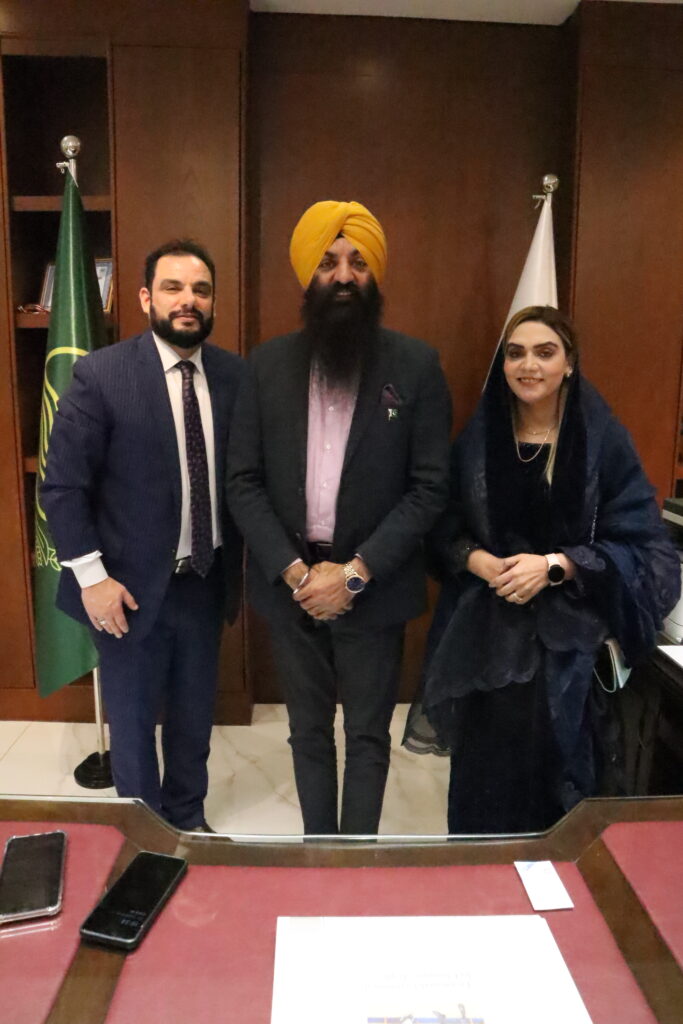
Our experience in the field helped us understand something important: if we want lasting change, we cannot work only at the edge of the problem.
We also have to engage the systems capable of changing it.
That is why Global Freedom Mission took concerns about vulnerable communities directly to government leadership in Punjab.
GFM leadership met with Sardar Ramesh Singh Arora, who has served as Punjab’s Provincial Minister for Human Rights and Minority Affairs, and discussed concerns affecting vulnerable communities, including conditions surrounding brick-kiln labor.
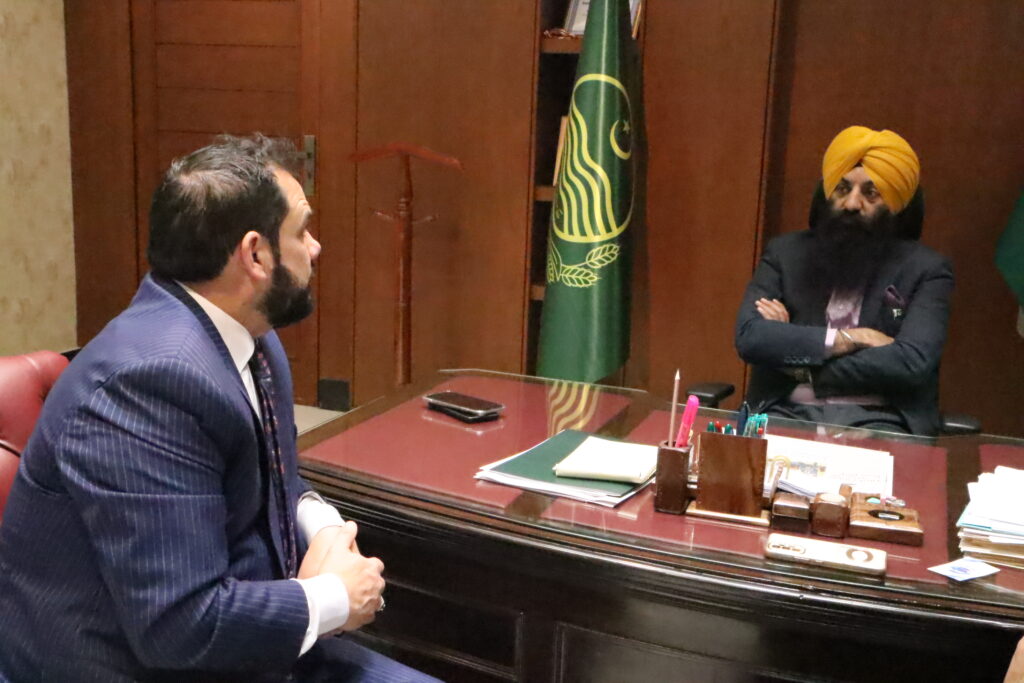
We did not go simply to take a photograph.
We went because bonded labor is already prohibited by law, and lasting change requires communication between affected communities and institutions responsible for law, public policy and protection.
One humanitarian organization cannot enforce labor law. One government office cannot address every cause of poverty. One donor cannot rebuild an entire system.
But government, humanitarian organizations, legal advocates, responsible business owners, schools, local communities and supporters can each address a different part of the problem.
Our goal in engaging government leadership is to help build a bridge between what the law promises and what vulnerable families experience on the ground.
That can include stronger enforcement, access to identification documents, education for children, social protection, appropriate legal assistance for people trying to leave genuine bondage, transparent employment practices and economic alternatives that help families remain independent.
Christians Face Particular Vulnerabilities, but This Is a Human Issue
Global Freedom Mission is a Christian humanitarian organization, and we have particular concern for Christian families who can face overlapping pressures involving poverty, discrimination and minority status.
The 2014 killing of Christian brick-kiln workers Shama Masih and Shahzad Masih in Punjab remains a devastating example of how poverty, debt, religious vulnerability and failures of protection can collide. Amnesty International documented that the couple worked at a brick kiln and were killed after allegations of blasphemy spread in the area.
But bonded labor is not exclusively a Christian issue.
Muslim families can become trapped. Hindu families can become trapped. Christian families can become trapped.
A Christian should not be enslaved. A Muslim should not be enslaved. A Hindu should not be enslaved. No human being should be enslaved.
Human dignity cannot depend upon religion.
Recent Punjab Measures Show What a Different System Could Look Like
There are also signs of efforts to address parts of the problem.
In September 2026, reporting from Lahore described Punjab labor officials announcing measures including written employment contracts, registration of brick-kiln workers, school-enrollment targets for workers’ children, social-security access and legal protections.
These measures point toward an important principle:
Ending bonded labor does not require ending legitimate brickmaking.
A lawful brick industry can employ people, support families and remain economically productive while workers receive documented wages, understandable employment arrangements, freedom of movement, education for their children and access to legal and social protections.
GFM’s Vision: Profitable Kilns, Free Workers
Global Freedom Mission’s long-term vision is not to destroy Pakistan’s brick industry.
Our goal is to see legitimate businesses prosper without human beings being trapped by unlawful debt.
We believe progress can include:
- Transparent wages and advances
- Written employment arrangements
- Accurate debt and wage records
- Freedom to leave lawful employment
- Protection against threats, violence and coercion
- Education for children
- Identity documentation
- Access to social protection
- Legal assistance for genuine victims
- Safe transitional support where needed
- Independent employment and livelihood opportunities for families leaving bondage
Where workers freely choose brickmaking as their occupation, their choice should be respected.
Where people are genuinely being coerced or held through unlawful bonded debt, the protections already contained in Pakistani law should become meaningful in their everyday lives.
Freedom Has to Last
Getting someone away from a kiln for one day is not enough.
Where will the family sleep that night?
How will they eat next month?
What happens when a child becomes sick?
Can the adults obtain legitimate work?
Can the children enter school?
Does the family have identification documents?
Do they understand their legal rights?
Can another emergency push them straight back into debt?
Freedom. Protection. Housing. Food. Employment. Education. Documentation. Financial stability. Independence.
Those are the kinds of outcomes Global Freedom Mission wants to pursue.
Success is not simply seeing a family leave a brick kiln. Success is seeing that family still free years later.
How We Believe Change Can Happen
Pakistan has already declared through law that bonded labor has no legitimate place in the country. The challenge is turning those protections into everyday reality for families who remain vulnerable.
Global Freedom Mission cannot accomplish that alone, and government cannot solve every part of the problem alone.
Sustainable change requires cooperation: workers who can safely speak, authorities who enforce the law, lawyers who can defend rights, responsible employers who provide lawful work, schools that receive children, communities that support families, and humanitarian partners willing to remain involved after an immediate crisis has passed.
GFM intends to continue working through lawful channels, engaging government and community leaders, documenting conditions, helping genuine victims reach appropriate assistance, and developing practical pathways toward independence.
Our long-term goal is not simply to count how many families left a kiln.
We want to help create conditions in which fewer families become trapped in the first place.
Corruption Must Be Investigated, Not Worked Around
Our concern is not simply that laws exist and families remain vulnerable. It is that coercion can continue when complaints are obstructed and powerful people escape accountability. The July 1995 Human Rights Watch report documented police interference, bribery and retaliation against bonded workers. Its age matters: it establishes a historical record, not a finding about a particular officer today.
The 2025 U.S. Trafficking in Persons Report also described reports of police and labor officers accepting bribes and officials hesitating to investigate influential alleged perpetrators. NCHR’s 2025 Punjab research identified weak oversight. Those findings support a clear demand for independent investigation and accountability.
Investigate the abuse. Protect those who report it. Prosecute proven offenses to the fullest extent of applicable law, including offenses committed by officials who protect exploitation. Lawful arrest, fair trials and penalties must follow evidence and the requirements of the competent courts. Political influence should never purchase immunity.
GFM calls for private worker interviews, complaints with traceable case references, escalation outside an implicated local police command, protection for witnesses and honest officials, and public reporting of aggregate case outcomes. Inspection counts alone do not show whether families can safely leave or remain free afterward.
Moses’ call, “Let My people go,” speaks to my conviction that human beings must not be held in bondage. Our response is a peaceful, lawful call for enforcement and protection, with humanitarian care that helps families rebuild. We seek partners who will turn that conviction into measurable action.
Read GFM’s expanded enforcement and accountability proposal. It requests a written government response within 30 days of receipt, a practical district pilot and quarterly reporting. These are proposed commitments, not promises of an agreed government program. Our donation appeals remain for food, medical assistance, clothing, schooling, clean water and humanitarian care, not payments to owners to free families.
Let My people go: a call for lasting freedom
Our firsthand experience leads to a clear call for lawful enforcement and lasting protection for families.
“Let My people go.” Our Christian conviction calls us to stand against bondage and seek justice through peaceful, lawful action.
We call on responsible Pakistani authorities to enforce the law, investigate corruption, prosecute proven offenses and protect families who report abuse. We invite Punjab’s labor, human rights and policing authorities, prosecutors, Pakistan’s National Commission for Human Rights and independent legal advocates to engage with our enforcement and accountability proposal.
Read the reports behind the call
- Human Rights Watch: Contemporary Forms of Slavery in Pakistan, July 1995, historical findings.
- U.S. Department of State: 2025 Trafficking in Persons Report, Pakistan, reproduced by ecoi.net.
- NCHR: Unveiling Exploitation and Abuse in the Brick Kilns of Punjab, 2025, official research summary.
Respond to GFM’s proposal or read the complete plan and church donor guide.
Share this story on LinkedIn · Share this story on X
Copy a message to share
Let my people go. Families deserve freedom from bonded labor, protection and a future. Read GFM’s story and the reports. #EndBondedLabour #Pakistan #HumanRights
Bonded Labor in Pakistan’s Brick Kilns: What We Witnessed and What Must Change
* These reports concern external investigations and provide context, not independent verification of a GFM case. We share them to raise awareness and do our best to verify accuracy before posting. GFM’s donations support humanitarian care, not payments to kiln owners to release families.
What Our Supporters Make Possible
This is where the supporters of Global Freedom Mission become an important part of the story.
When people support GFM, they are not simply supporting a photograph, a trip or a single moment of relief.
Your partnership helps us visit communities, feed families, pray with them, share the gospel and show love through practical assistance. Giving appeals support humanitarian needs such as food, medical care, clothing, schooling and clean water.
Our advocacy calls for lawful enforcement and access to qualified legal help. It is separate from the donation appeal. We do not ask donors to buy a family’s freedom, pay a kiln owner for a release or settle a claimed debt as a way to free someone.
And perhaps most importantly, it can help us stay involved after the dramatic moment has passed.
We want to help families move toward:
- Food, medical assistance, clothing and other humanitarian essentials
- Safe temporary support when necessary
- Identification and documentation
- Education for children
- Legal assistance when appropriate
- Stable employment or livelihood opportunities
- Financial stability
- Long-term independence
Our goal is careful, lasting progress: helping families responsibly, learning what works, building trustworthy partnerships and expanding sustainable efforts as resources and local capacity grow.
There are hundreds of thousands of people represented in the estimates surrounding bonded labor in Pakistan’s brick kilns.
We cannot promise to change hundreds of thousands of lives overnight.
But we can refuse to look away.
We can stand with families.
We can advocate for children.
We can work with people in positions of responsibility.
We can help build pathways toward independence.
And with committed supporters beside us, we can keep working toward a future where fewer children are born into a cycle they never chose.
Human beings should never lose their freedom because they are poor. Children should not inherit a cycle they never chose. And freedom should not end when a family walks away from a kiln. That is where rebuilding begins.
Sources and Further Reading
- Pakistan Code: Bonded Labour System (Abolition) Act, 1992
- International Labour Organization: A Study of Deficits in the Fundamental Principles and Rights at Work in the Brick Kiln Supply Chain
- ILO NORMLEX: Supervisory Material on Bonded Labour in Pakistan
- International Labour Organization: Social Security and Documentation for Pakistan’s Brick-Kiln Workers
- Dawn: September 2026 Reporting on Bonded-Labor Enforcement and Punjab Worker Protections
- Amnesty International: Shama and Shahzad Masih and Religious-Minority Vulnerability in Pakistan
About Global Freedom Mission
Global Freedom Mission works with vulnerable communities to advance practical help, human dignity, opportunity and sustainable freedom. Our goal is not temporary relief alone, but helping individuals and families move toward independent futures.
Learn more: Global Freedom Mission
Support the Mission
If this story moves your heart, stand with Global Freedom Mission as we continue working with vulnerable communities in Pakistan.
Your gift helps provide food, medical assistance, clothing, schooling, clean water and other verified humanitarian support for vulnerable families. During visits, we pray with families, share the gospel and show them love. Assistance does not depend on taking part in prayer or sharing our faith.
We are not interested in creating one moment of freedom. We want to help build a future where freedom can last.